There Will Be Signs:
Signifiers for an Uncertain World
2026 Art Blocks × OpenSea |
Marfa Artist Residency | Work-in-Progress
There Will Be Signs is a series of generative artworks and public sculptures that explores signs as systems of meaning rather than objects of instruction. Rather than producing signs, I create signifiers—works that occupy the visual language of signage while withholding stable messages. Existing somewhere between road sign, interface, monument, and glyph, they ask how symbols acquire authority, circulate through culture, and shape the way we navigate both physical and networked worlds.
The title is intentionally ambiguous. There Will Be Signs sounds prophetic, ominous, even cinematic. It suggests revelation while leaving its source unresolved. It echoes biblical language, protest slogans, weather warnings, and everyday roadside promises, remaining open to multiple interpretations. Each work functions simultaneously as an object and a signal, a symbol and a symptom, pointing beyond itself toward larger systems of communication, belief, and control.
Dedicated site: www.therewillbesigns.art
Visit the link above for a locations and photographs of the installation in Marfa, Texas and how to collect the work.
Sign Sculptures


SYSTEM
There Will Be Signs is a generative system that borrows the familiar language of public signage: road warnings, advertisements, civic instructions, symbols, and directional markers. Built for the web using p5.js, the work combines language, glyphs, colors, patterns, and compositions to create signs that feel familiar but don’t quite behave as expected.Many of the works begin with something direct: a phrase, symbol, or instruction that can be understood at a glance. Looking longer reveals another layer. Smaller text, repeated marks, fragments of language, and competing signals begin to complicate the message. What first appears to offer direction becomes less certain, leaving the viewer somewhere between reading a sign and interpreting one.
Generative Images
Custom software, color, dimensions variable, generative, javascript, htmlThis project is still developing. Its images, text, and creative process may change as the work continues to take shape.
Development 0.02_080326


- Introducing glyph overlays
- Larger symbolic forms
- Layered sign compositions
- Varied text layouts
Development 0.02_080826


- Sign structures
- Typography
- Institutional language
- Subtle symbolic systems
Development 0.03_082226


- Phrase hatching and text systems
- Expanded symbol vocabulary
- New color palettes
- Refined background systems
SITE
There Will Be Signs moves between landscape and screen, occupying both as different forms of public art. Across both, the project asks what happens when a sign loses its sender. When the institution behind the message disappears. When the danger has passed, the product is gone, and the authority behind the directive no longer exists.Marfa sits at an unusual intersection of desert roads, minimalist sculpture, and now generative art. All three run through this project. I grew up in a military family, came of age in the Southwest, and have spent much of my life on the road, reading what passes by. The signs I am making now feel like something all those miles have been pointing toward.
Reference Images


THE ROAD
Donald Judd came to Marfa because the West Texas desert offered something museums could not: a sustained encounter with work, light, space, and the vast indifference of the land. That landscape is also a sign system: ranch gates, county road markers, hand-painted warnings, directional arrows, and distances measured in miles to places that may or may not still exist.There Will Be Signs emerges from several overlapping lineages. Judd’s work established context as inseparable from the object, where space, distance, light, and duration become part of the experience of the work. Ed Ruscha turned the deadpan language of the American road into image, holding commercial directness and poetic ambiguity in the same frame. And the Burma-Shave sequences that once punctuated American highways transformed roadside advertising into a kind of distributed vernacular poetry, where meaning accumulated through motion, repetition, timing, and the empty distances between signs.
These histories converge in a landscape already filled with instructions, markers, warnings, and symbols. There Will Be Signs enters that existing language not by making signs that tell us where to go, but by making signifiers whose meaning remains uncertain.
Artifacts, 2025 - Present

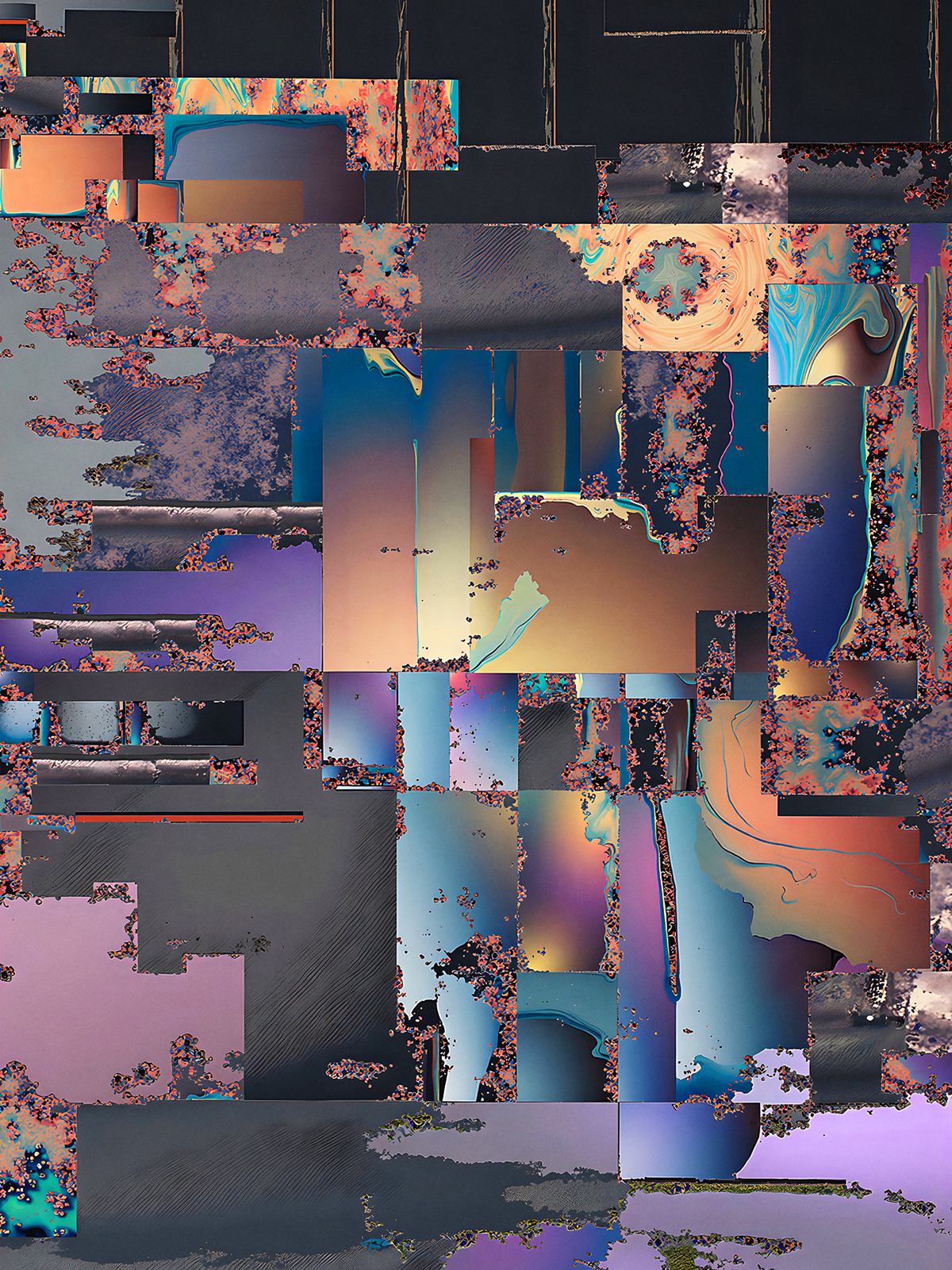
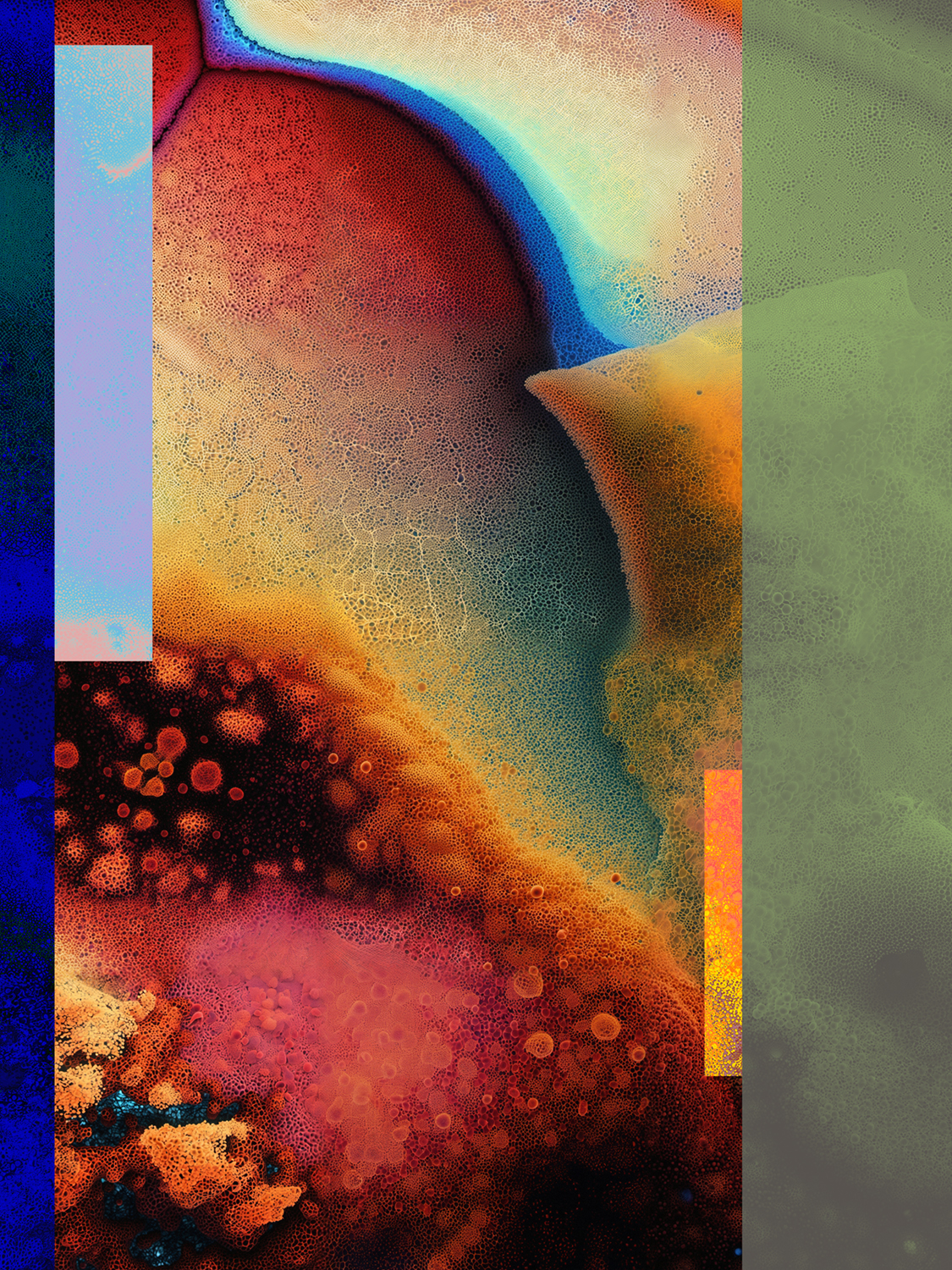


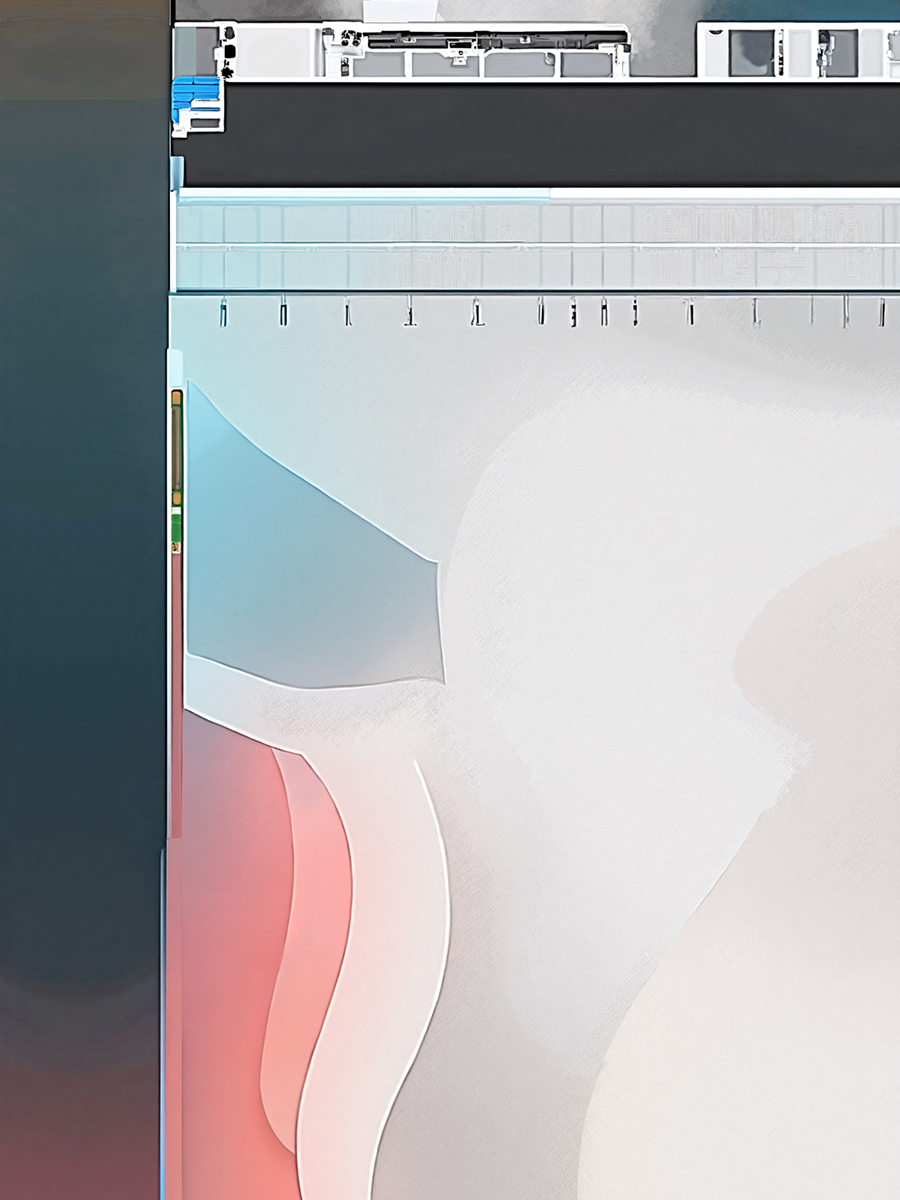


Artifacts is a series of abstract works by Travis LeRoy Southworth. “Artifacts” is composed of 3:4 portrait sized fragments, merging human intention with machine-learning distortions in a symbolic interplay of form and error. Southworth chose the word ‘artifact’ due to its multi-layered meaning; from an object shaped by human craft to a distortion produced by technological interference. The work is meant to echo both the creative eye of the artist and the “glitches” that arise when machines interpret reality. By embracing the possibility of inaccurate observations or unwanted features, these compositions highlight the interplay between deliberate intent and the unpredictable outcomes of AI generative algorithms.
Select works can be viewed and collected as NFTs on OBJKT
Non-Fungible Tokens on Tezos Blockchain
JPGs and metadata are stored on IPFS
Panoply, 2024 - Present
As the Screens Move In, digital video, no audio, 11 second loop, 2460 x 4096 pixels
Panoply, from the Greek “panoplia” meaning all arms or a splendid array, plays on both senses of the term—its protective roots and its expansive scope. In these animations, AI’s many “arms” become both a mesmerizing display and a subtle shield, masking deeper truths behind the spectacle. By immersing viewers in screens that simultaneously captivate and distort, “Panoply” illustrates how media’s dazzling illusions can protect us from confronting what lies beneath.
Substratum, 2024
Substratum, digital video, no audio, 40 seconds, loop, 2890x4096 px
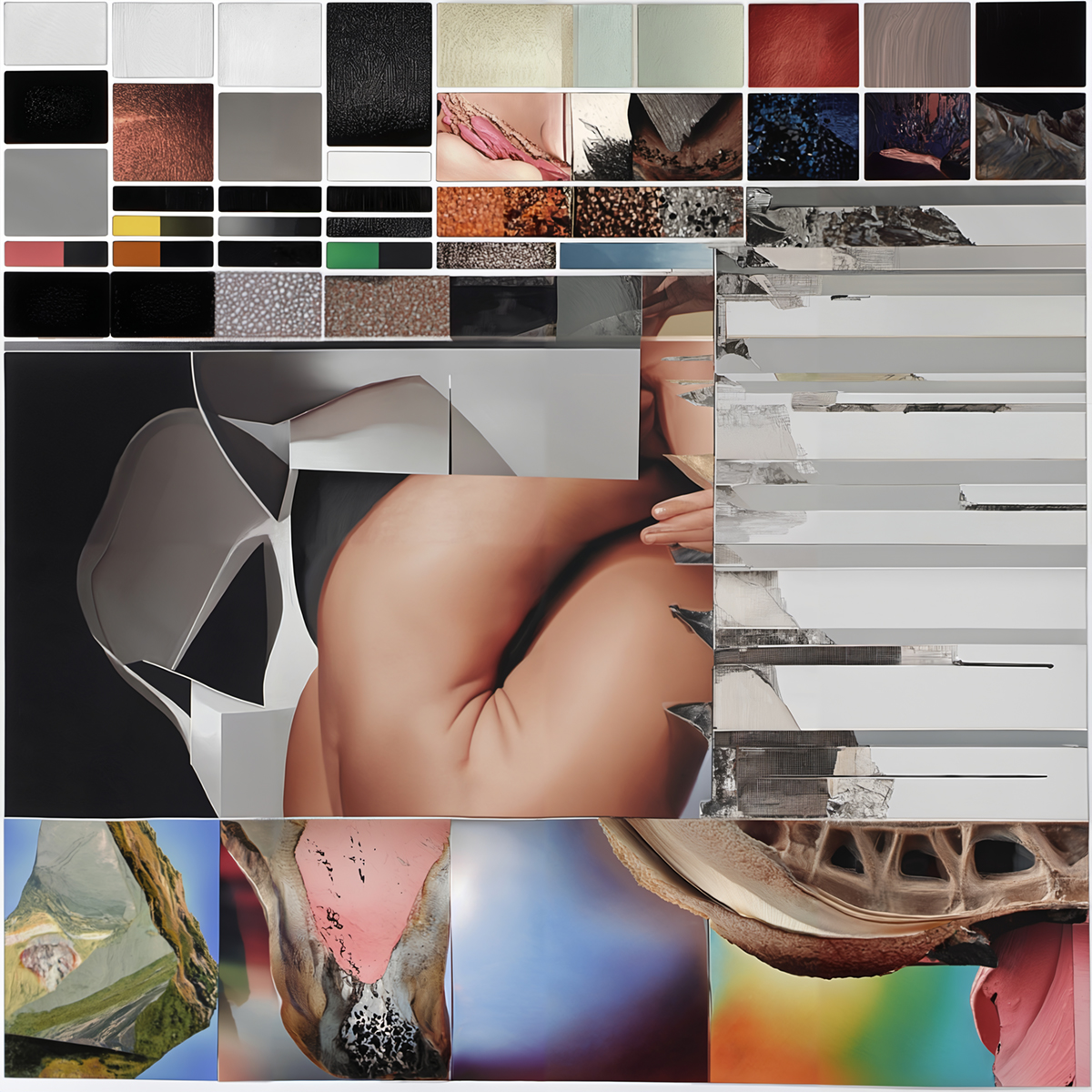
Substratum is part of Omnia Ludens, a larger series that begins with images designed to make machines see correctly: printer calibration targets, registration marks, generic portraits, color bars, and test patterns. These images promise neutrality, accuracy, and control. When passed through generative AI systems, however, they begin to mutate into scenes, bodies, architectures, rituals, and impossible environments. The work considers how reality is trained, corrected, standardized, and performed through images. It reveals that even the tools designed to measure visual truth are unstable, and that artifice may be one of the clearest ways to see how reality is made.
--
Omnia Ludens, a poetic translation from Latin meaning “Everything in Play,” reflects on authenticity and artifice in the age of artificial intelligence and synthetic image creation. The project begins with printer test images: standardized mosaics of generic photographs, color bars, registration marks, gradients, and shapes designed to maintain accuracy in mechanical reproduction. Southworth repurposes these utilitarian images as prompts for AI diffusion models, transforming tools of calibration into catalysts for hallucination, invention, and visual drift.
The printer test image functions as both material and metaphor. It represents a technical pursuit of precision, consistency, and control, while AI generation introduces fragmentation, mutation, and chance. By placing these systems in conversation, Omnia Ludens explores the tension between accuracy and imagination, mechanical reproduction and neural network appropriation, standardization and infinite variation.
Southworth’s background as a photo retoucher in the advertising and beauty industries informs his ongoing interest in image manipulation, digital imperfection, self-perception, and constructed authenticity. In Omnia Ludens, he turns toward the visual detritus of printers and the vast image archive absorbed by AI systems as sites of conceptual inquiry. What was once used to correct images becomes a way to question how images are made believable in the first place.
The project asks what happens when authenticity and artifice are no longer opposites, but intertwined conditions of contemporary image-making. Is an image authentic because it begins with human intention, or does every process of fabrication, whether mechanical, digital, or conceptual, produce its own form of truth? Through Omnia Ludens, Southworth considers a world in which every image can be remade, every reference reassembled, and every visual standard put back into play.
Omnia Ludens, 2023 - Present
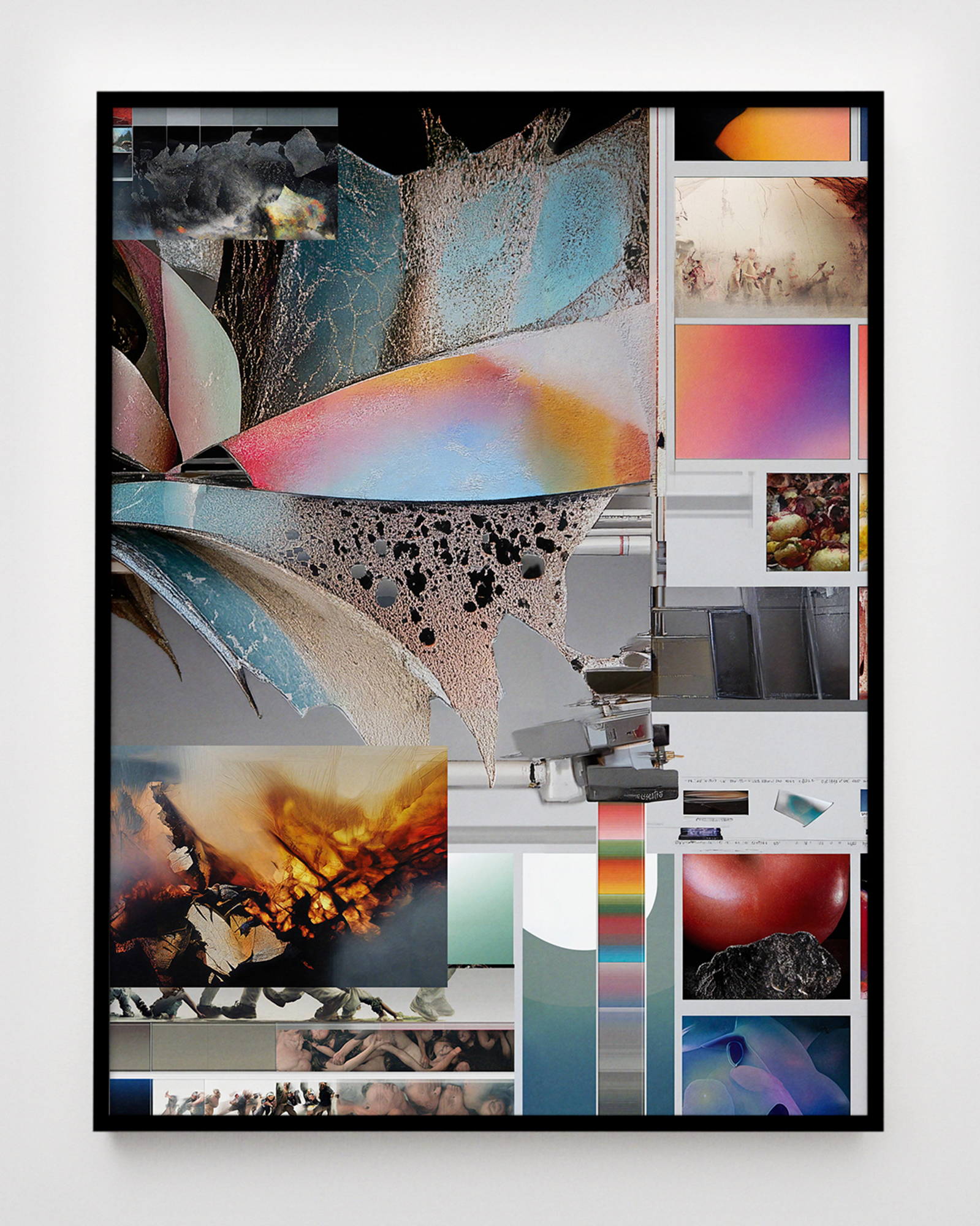
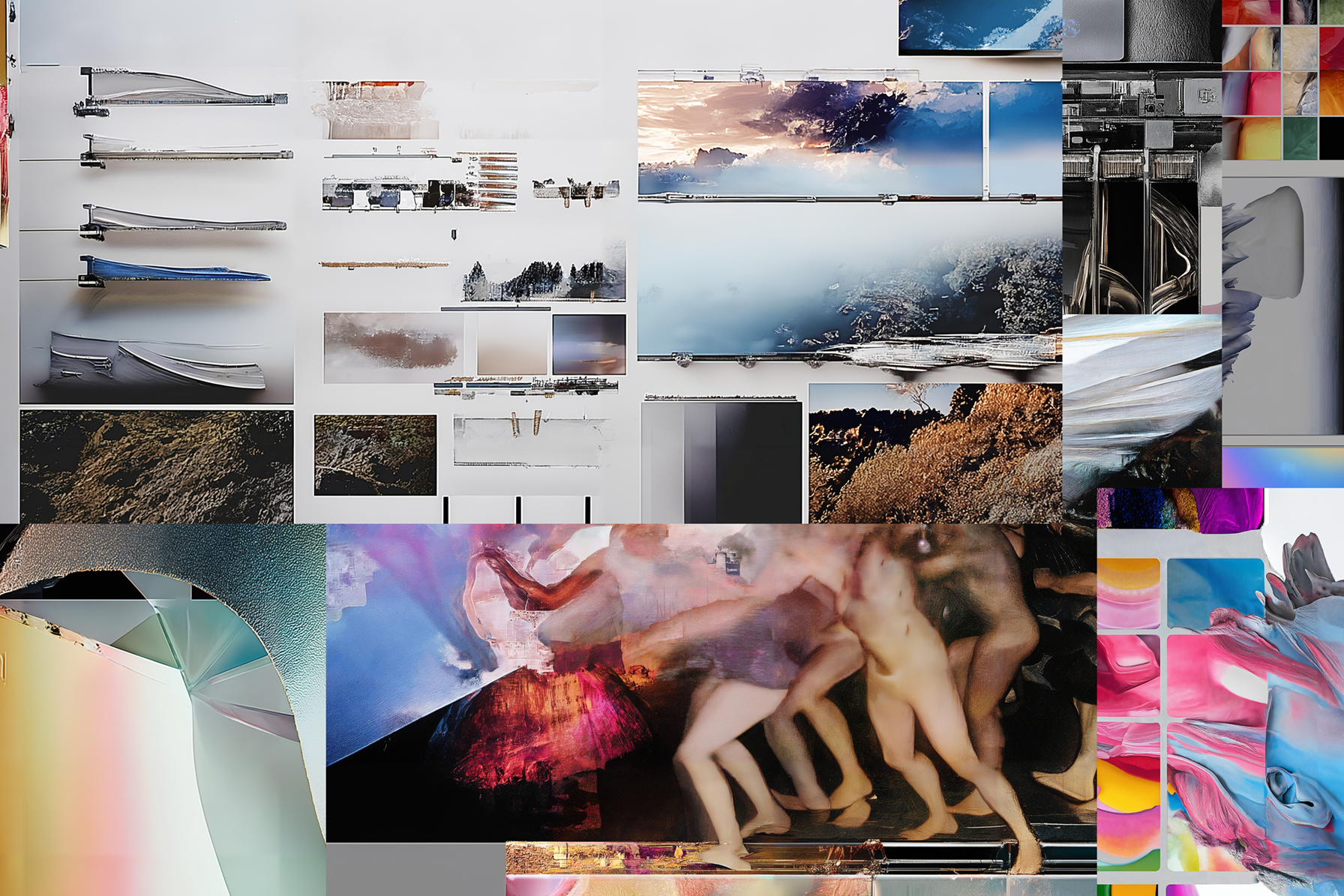


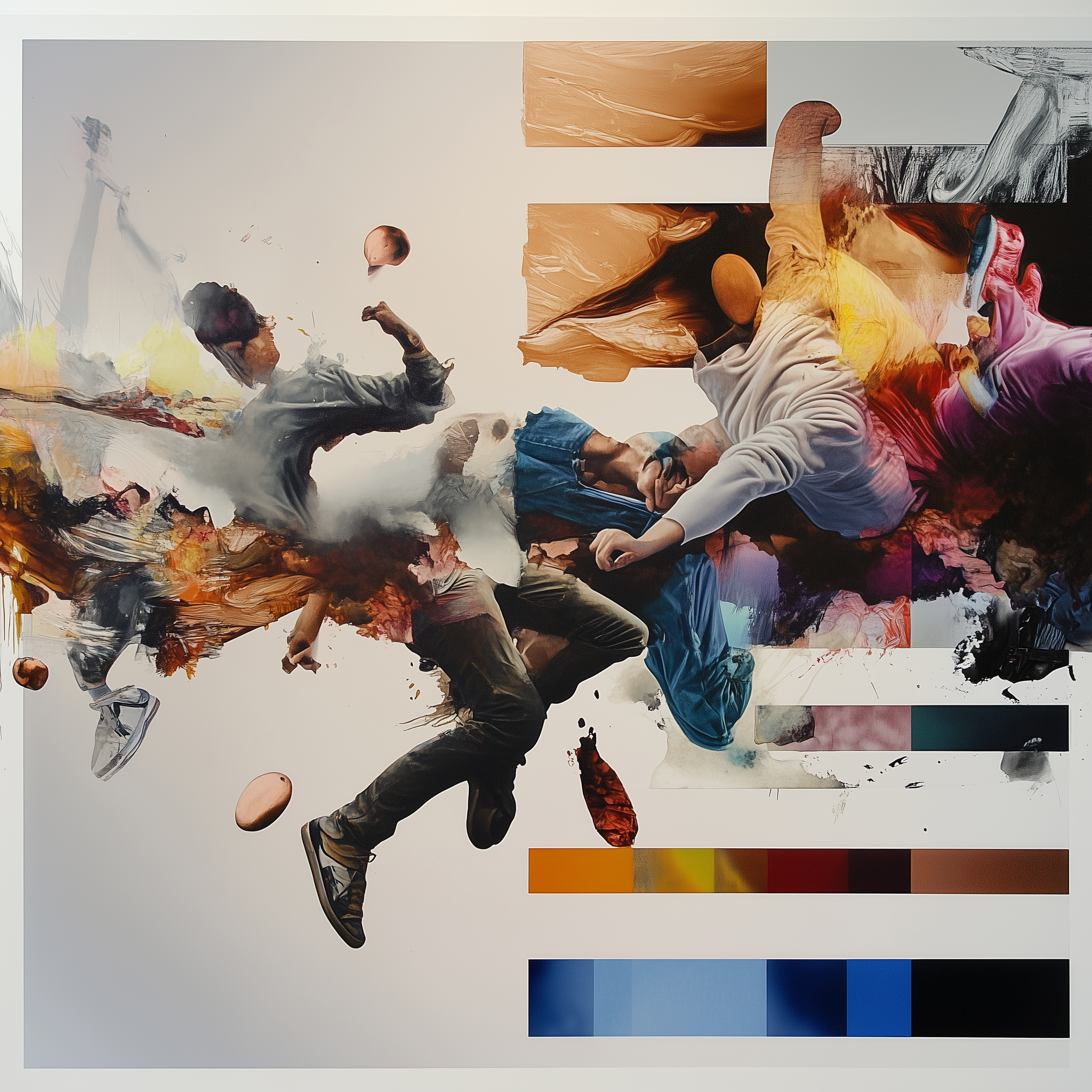
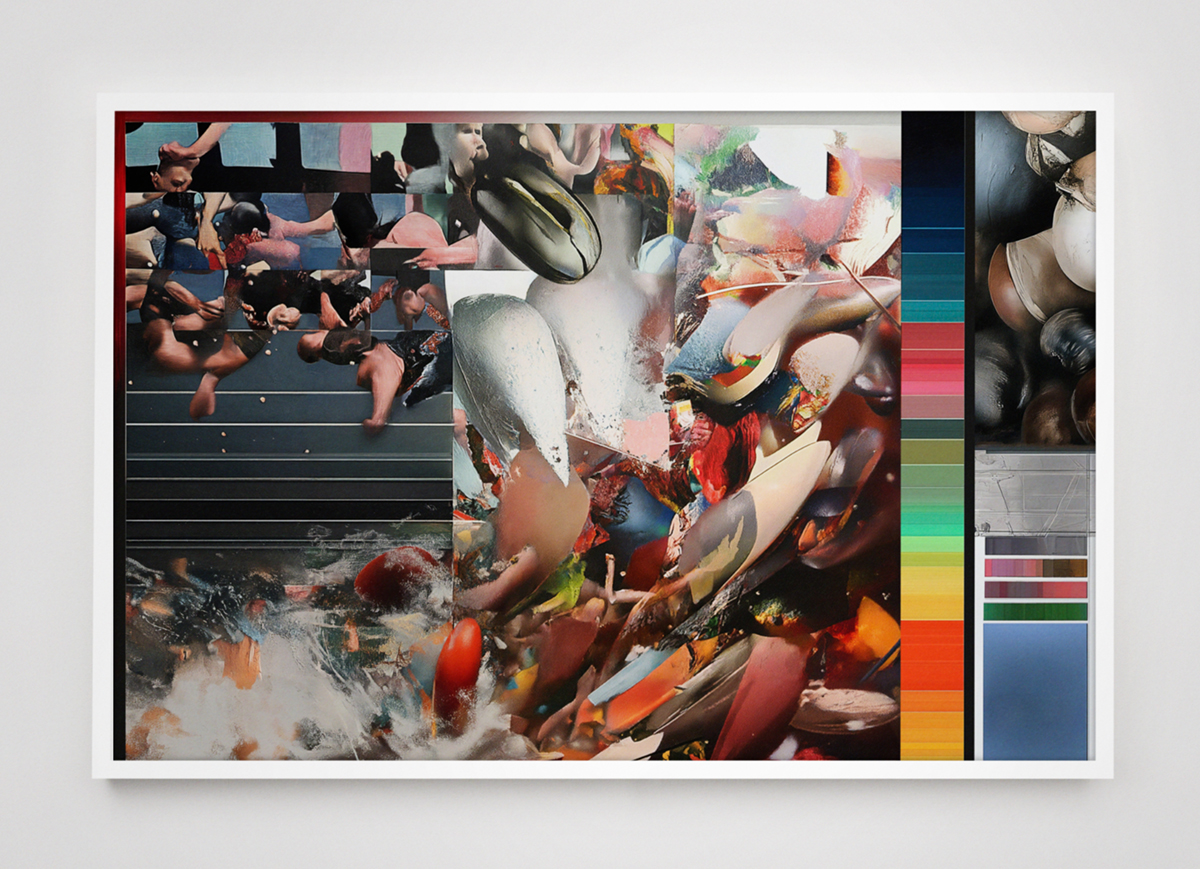
Omnia Ludens—a poetic translation from Latin for “Everything in Play”—is a reflection on authenticity and artifice in the age of image creation and artificial intelligence. In this project Southworth seeks out the essence of AI diffusion models, which are trained on vast image datasets. His process involves repurposing printer test images—those ubiquitous mosaics of generic photographs, colors and shapes designed to maintain color accuracy—into AI prompts to generate new works. This intersection of mechanical reproduction and neural network appropriation reflects a new paradigm where anything imaginable can be manifested.
The printer test images serve as both a tool and a metaphor. They embody the technical pursuit of perfection in reproduction while also symbolizing the fragmentation and reassembly inherent in AI-generated art. By juxtaposing these test patterns with the concept of infinite generative possibilities, the project explores the tension between precision and randomness, control and chaos.
Having worked as a Photo Retoucher in the advertising and beauty industries, Southworth often utilizes aspects of image manipulation and digital imperfections to touch upon notions of self perception and authenticity in his artworks. Omnia Ludens is no exception as he looks towards the detritus of printers and the vast image dump of AI generation as a portal for conceptual exploration.


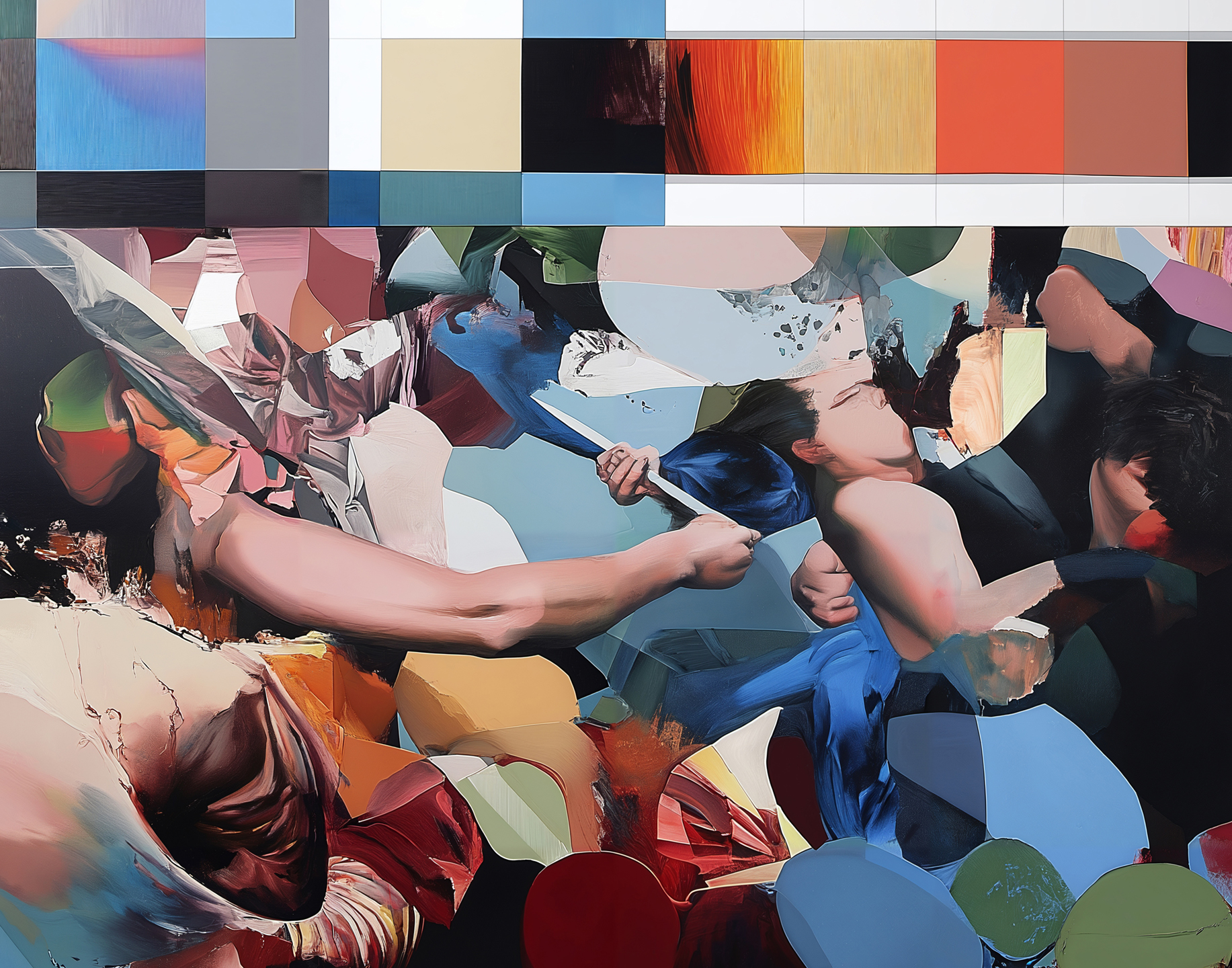
To navigate the spectrum between authenticity and artifice is to explore the dynamic interplay between what is perceived as genuine, original, or real, and what is constructed, imitative, or fabricated. It suggests a movement through the tension-filled space where these ideas intersect, overlap, and blur. In art, this might mean questioning the origins of creativity: Is a piece authentic because it stems from human intention, or does the process of fabrication—whether mechanical, digital, or conceptual—imbue it with artifice? It reflects how authenticity often carries a sense of truth or sincerity, while artifice might invoke the deliberate construction of appearances, illusions, or narratives.
This doesn’t imply choosing one over the other; rather, it involves engaging with both as equal parts of the creative process. It’s about examining the ways in which the authentic can feel manufactured, and the artificial can evoke sincerity. Through Omnia Ludens, Southworth invites viewers to contemplate the implications of a world where every image, idea, and concept is accessible and mutable. It’s an exploration of how technology redefines creativity, challenging us to consider what it means to create when “everything” is at our fingertips and “all things are in play.”